
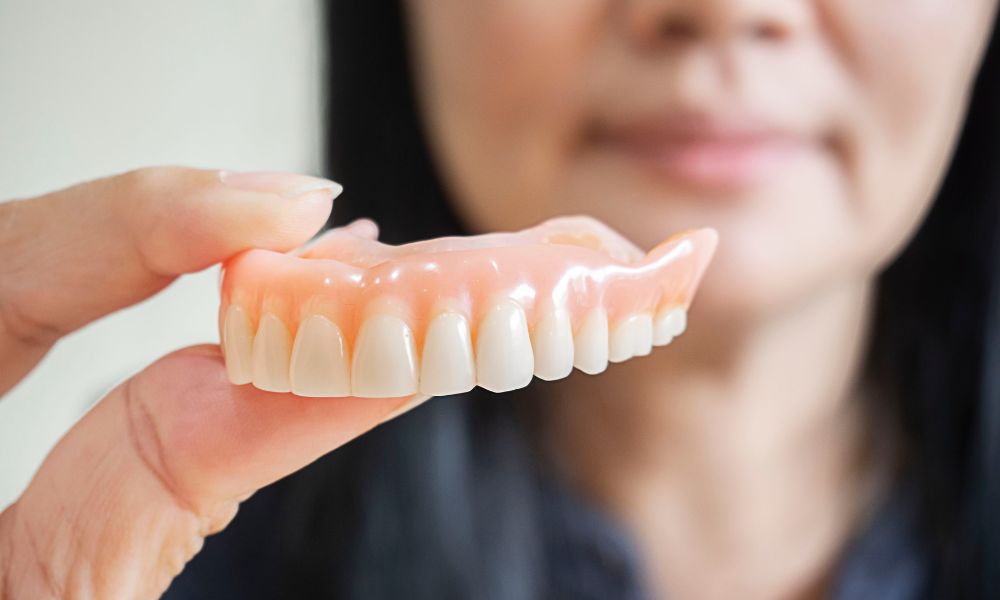
Dentures are often misunderstood by dental patients. Google offers conflicting advice, and friends share myths on why other treatments are a far better option. You’re left unsure of what your options are, what they truly entail, and even whether they actually fit into your lifestyle.
In reality, dentures are a viable option for many dental issues. Find real answers to who dentures can help, your options, what the first month genuinely feels like, and more, to understand what living with dentures in Bondi is like.
Key takeaways: Dentures are a practical, lifestyle-friendly fix for missing teeth or chewing difficulties, with full, partial or implant-retained designs tailored to you. After a brief settling-in period, simple daily care keeps them comfortable. Most dentures last 5–7 years, and you can upgrade later with implants.
Signs you might benefit from dentures
- Missing teeth: You’re missing several teeth or have multiple tooth extractions planned.
- Loose teeth: Teeth are loose from advanced gum disease, or several are too decayed to be restored predictably.
- Diet issues: You avoid foods because chewing is difficult or uncomfortable.
- Cracked teeth: Multiple teeth are cracked, repeatedly breaking, or failing past fillings and dental crowns, making a comprehensive replacement more sensible.
- Loose dentures: Your current denture feels loose, rubs, or causes sore spots.
Denture care
While dentures don’t require extensive daily maintenance, you can prolong their lifespan by regularly cleaning and storing them correctly.
Daily denture care
Dentures do not get cavities, but they collect plaque just like teeth. If you do not clean them, you risk sore gums, bad breath, staining, and a poorer fit over time.
In a hospital trial, every cleaning method reduced germs on dentures, but the quickest and most effective was a 10-minute soak in a very dilute bleach solution. At home, always follow your dentist’s advice, use dental-specific cleansers and rinse thoroughly.
Your daily routine should consist of rinsing your dentures, then brushing your gums, tongue, palate and any natural teeth with a soft brush and fluoride toothpaste. After meals, remove the denture and rinse it under running water. Swish water around your mouth to clear food. If you wear partial dentures, brush and floss carefully around the clasps.
In the evening, ensure that you thoroughly brush the dentures, then soak them overnight in fresh denture solution or clean, cool water. Do not sleep in your dentures unless your dentist has advised it for short-term use after extractions. Remove all adhesive residue each night.
Weekly deep clean
Once a week, give your denture a deeper clean. Soak it in an effervescent denture cleanser as directed (typically 10–15 minutes), then brush all surfaces with a soft denture brush to lift bacteria buildup and stains. Rinse thoroughly and pat dry before applying any adhesive.
Your dentist will advise you on specific care for the denture materials you have chosen.
Products to avoid
- Regular toothpaste and whitening pastes: Regular toothpastes and whitening pastes are too abrasive and can scratch acrylic, making plaque stick.
- Household bleach, chlorine and peroxide: Basic cleaners can weaken acrylic, corrode cobalt-chrome and fade gum tinting. Household bleach is much stronger than diluted bleach for cleaning.
- Household cleaners: Avoid harsh chemicals, as they can damage denture surfaces.
- DIY mixes (vinegar, bicarb, salt, lemon): Acidic or gritty cleaners can roughen the fit surface and irritate gums.
- Alcohol-heavy mouthwashes: These mouthwashes can dry tissues and may craze flexible (nylon) partials.
- Long soaks for soft liners: Avoid strong tablets; use only short, enzyme-based soaks.
- Metal tools, pins or hard brushes: Abrasive cleaning can cause gouges and harbour bacteria.
- Superglue or home repair kits: Regular glues leave toxic residues and can cause misalignment; any denture break needs a professional repair.
Denture adhesives
Adhesives can be useful for short-term support. Your dentist may recommend them for brand-new dentures during the settling-in phase, for narrow lower ridges, for dry mouth, or for a big day out.
A systematic review of past studies found that denture adhesives generally help dentures stay in place; there aren’t strong long-term safety studies, so they shouldn’t be used to “fix” a poor fit.
Storing and handling dentures
Keep your dentures moist whenever they’re out of your mouth. Store it overnight in a labelled case with clean, cool water or fresh denture solution. Avoid hot or boiling water and direct sun, which can warp acrylic and soften liners.
Take care when handling your dentures. Even small cracks or bends can change how the denture seats. Clean and insert over a folded towel or a basin of water so it won’t crack if dropped. Hold the denture with two hands at the thickest parts rather than squeezing the clasps or the palate. Keep it out of reach of children and pets.
For partial dentures, take extra care around metal clasps and rests. Don’t bend them to “tighten” at home; you’ll weaken the metal and risk breakage. If a clasp feels loose or rubs, book an adjustment.
Dentures’ lifespan
Most conventional acrylic dentures last about 5 to 7 years before a remake makes sense. Your gums and bone keep remodelling, teeth wear down, and the fit loosens over time.
Looseness or more adhesive needed, sore spots, food trapping, clicking, cracks, stained or flattened teeth, or changes in your face shape. Book a quick dental checkup if any of these show up.
Denture repairs
If a denture breaks, keep all pieces, store them in water, and bring them to your dentist. For implant-retained dentures, you can soak the denture itself as usual, but don’t soak any in-mouth components.
The Denture Options We Offer
At Bondi Family Dentist, we work closely with every patient to identify their needs and recommend the denture type that best restores their smile and lifestyle.
Full Dentures
Full dentures are ideal when you’re missing all your teeth in either your upper or lower jaw. These removable appliances rest comfortably on your gums and can be removed for cleaning, sleeping, or eating, as advised by your dentist. Today’s full dentures are lighter, more natural-looking, and more comfortable than ever before.
Partial Dentures
Partial dentures, sometimes called dental bridges, work well if you still have several healthy teeth remaining. They fill gaps, prevent your natural teeth from drifting, and maintain your bite alignment. Partial dentures are straightforward to clean and can be crafted to blend seamlessly with your existing teeth.
Implant-Retained Dentures
Implant-retained dentures attach securely to small titanium implants in your jawbone. This option offers superior stability and confidence, letting you enjoy your favourite foods and speak naturally without worrying about movement. Many Bondi patients choose implant-retained dentures for their comfort, function, and realistic appearance.
How dentures fit into a Bondi lifestyle
An active Bondi lifestyle requires dentures that work in tandem with that. Although there are trade-offs to be made in every situation, you’ll find that dentures offer a complete solution that doesn’t compromise your living standard.
Why dentures offer a long-term cosmetic dentistry solution
Dentures offer a complete solution to predictably and conservatively restore the look of your smile.
Smile restoration
Dentures restore the whole smile without surgery, making them practical when many teeth are missing or cannot be saved. They are reversible and adjustable, so you can refine comfort and appearance over time rather than committing to drilling or multiple complex procedures.
Custom aesthetics
Tooth shade, shape and arrangement are tailored to your features, with the look of natural gums and tinting for a natural result. Dentures also support lips and cheeks, softening a “collapsed bite” look and refreshing facial proportions.
Aligns with gum changes
As gums naturally adjust to the dentures, simple relines or soft liners can restore denture fit. Your dentist can also replace worn teeth or repair fractures.
Easier hygiene
Because some dentures are removable, they make dental hygiene at home easier. You can clean the remaining teeth thoroughly, reducing plaque, thrush, and staining risks, and protecting natural teeth.
Works well with dental implants
Start with a conventional plate and, when ready, add two to four dental implants for a snap-on overdenture, or progress to a fixed full-arch bridge.
Conclusion
Comfortable, natural-looking dentures come down to three things: the right design, a simple daily routine, and timely tweaks as your mouth changes. Whether you need a full dentures, partial dentures, or an implant-retained dentures option, there are clear options that suit your needs.
Ready to take the next step? Book online at Bondi Family Dentist.


